If you play Wordle even semi-regularly, you already know the feeling. You open the puzzle, type in a confident first word, and suddenly half the tiles go gray. Now what? This is exactly where wordle hints matter most. Not spoilers, not cheats, but real clues hidden inside the game’s design that help you think better, not harder.
Wordle isn’t just a word game. It’s a logic puzzle wrapped in simple rules, and the people who win consistently aren’t luckier — they’re better at reading hints, spotting patterns, and avoiding common thinking mistakes. This guide breaks all of that down in a way that actually makes sense, even if you’ve failed yesterday’s puzzle (we’ve all been there).
What Wordle Hints Really Are (And What They’re Not)
A lot of players misunderstand what hints mean in Wordle. There are no written clues, no categories, and no definitions. Instead, Wordle gives visual hints through color feedback after each guess.
- Green tiles show correct letters in the correct position
- Yellow tiles show correct letters in the wrong position
- Gray tiles show letters that are not in the word
That’s it. Every strategy, trick, and winning streak comes from interpreting those three signals correctly. According to the official Wordle help documentation published by The New York Times, the game is intentionally minimal so players rely on deduction rather than memory or trivia — which is what makes hints so important to master.
Why Wordle Hints Matter More Than Vocabulary
You don’t need a massive vocabulary to be good at Wordle. In fact, knowing rare or fancy words can sometimes hurt your game. What matters more is decision-making.
Good Wordle players use hints to:
- Eliminate impossible letters early
- Narrow down word structure
- Test letter placement efficiently
- Avoid repeating known mistakes
Bad players (no offense) often ignore hints, reuse gray letters, or get stuck chasing one idea that doesn’t fit the evidence.
Best Starting Wordle Hints for Strong First Guesses
Use High-Value Letters Early
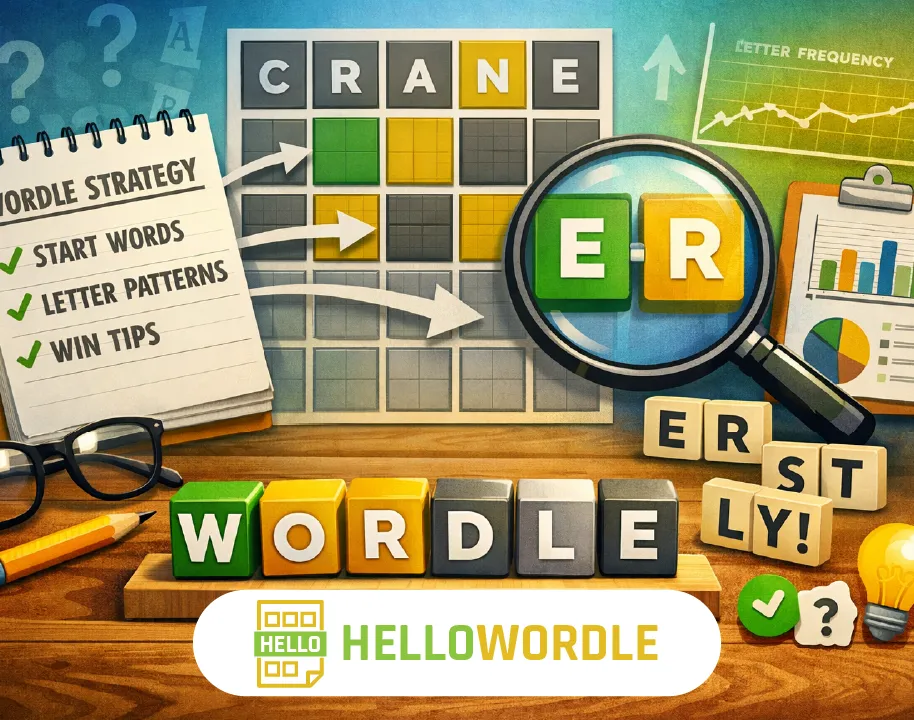
Your first guess should not be random. It should test common letters and vowels to collect maximum information. Words with multiple vowels and frequent consonants are ideal.
Good examples:
- SLATE
- CRANE
- AUDIO
- TEARS
These words don’t guarantee a win, but they give useful hints fast. The goal of guess one isn’t solving — it’s learning.
Avoid These Early Mistakes
This is where many players slip up:
- Using repeated letters too early
- Starting with obscure words
- Guessing emotionally instead of logically
Wordle rewards patience, not confidence.
Reading Wordle Hints the Right Way
Green Tiles Are Locked Information
Once a letter turns green, that spot is fixed. Don’t move it. Don’t question it. Build around it.
Many players accidentally ignore green hints when they panic — that’s usually how streaks die.
Yellow Tiles Are Positional Hints
Yellow doesn’t mean “almost right.” It means definitely in the word, just not there. Treat yellow letters as high-priority clues and reposition them logically in future guesses.
Gray Tiles Are Filters, Not Enemies
Gray letters usually mean “don’t use again,” but be careful with repeated letters. If a word contains two of the same letter, Wordle may gray one and color the other. This confuses a lot of players and causes wrong assumptions.
Mid-Game Wordle Hint Strategy (Where Most Games Are Won)
By guess three or four, you should be thinking in structures, not words.
Instead of guessing:
“What word sounds right?”
Ask:
“What letter patterns still make sense?”
This mindset shift is huge.
Use Elimination Words
Sometimes the best guess isn’t a possible answer — it’s a testing word that checks multiple unknown letters at once. This is especially helpful when you’re stuck between several similar options.
Common Word Mistakes Players Make in Wordle
Wordle quietly exposes how often people confuse common word rules. Some frequent mistakes include:
- Assuming plural words are allowed (most aren’t)
- Forgetting that past tense verbs rarely appear
- Confusing letter frequency with personal preference
- Ignoring how English commonly ends words
For example, many players overuse words ending in “-S” or “-ED” even when hints don’t support it.
Common Grammatical Errors That Hurt Your Guessing Logic
Yes, grammar actually matters in Wordle.
Here are subtle grammatical thinking errors that trip players up:
- Treating vowels as interchangeable when they’re not
- Forgetting English word flow (like consonant clusters)
- Assuming every word must “sound natural” when tested aloud
- Misplacing double letters based on habit, not hints
Even professionals make these errors, especially when rushing. Slowing down helps more than guessing smarter words.
Real-World Example: How Wordle Hints Solve the Puzzle
Let’s say your first guess is SLATE.
- S = gray
- L = yellow
- A = gray
- T = green
- E = yellow
Now you know:
- T is locked in position
- L and E must move
- S and A are out
Instead of guessing emotionally, you now test combinations that respect all hints. This is how consistent 3- or 4-guess wins happen.
Hard Mode: The Best Way to Learn Wordle Hints Faster
Hard Mode forces you to use every hint you receive. You can’t ignore yellow or green letters. This feels restrictive at first, but it trains disciplined thinking fast.
Players who switch to Hard Mode often see:
- Shorter solve times
- Fewer wasted guesses
- Better long-term streaks
It’s uncomfortable, but effective.
Pros and Cons of Using Wordle Hints Properly
Pros
- Fewer guesses
- Stronger logic skills
- Better streak consistency
- Less frustration
Cons
- Requires patience
- Less “gut feeling” guessing
- Can feel slow at first
Worth it though, honestly.
FAQs About Wordle Hints
No. The official version relies entirely on color feedback.
No, answers are selected from a curated list, not random words.
Only if repeated letters are involved and you misread gray tiles.
Conclusion: How to Actually Get Better at Wordle
Wordle hints aren’t secrets — they’re signals. The players who improve are the ones who respect those signals, slow down, and think structurally instead of emotionally.
If you want real improvement:
- Choose smarter starting words
- Trust green and yellow tiles fully
- Stop repeating gray letters
- Watch for common word and grammar traps
- Treat each guess as a logic step, not a gamble
Do that consistently, and Wordle stops feeling random. It starts feeling solvable — which is exactly how the game was designed.