
If you’re searching for how to play wordle, you probably fall into one of two camps: either you’ve never tried it before, or you’ve played a few times and thought, “Wait… am I doing this right?”
Wordle looks simple. Five letters. Six guesses. A few colored squares. That’s it.
But behind that clean interface is a clever logic puzzle that mixes vocabulary, probability, and pattern recognition in a way that’s surprisingly addictive. In this complete guide, you’ll learn the official rules, advanced strategies, Hard Mode details, common letter patterns, and even how to use analytical tools to improve. We’ll also use structured tables throughout so everything stays crystal clear.
Let’s break it down properly.
What Is Wordle?
Wordle is a daily five-letter word puzzle created by Josh Wardle in 2021. After going viral worldwide, it was acquired by The New York Times in early 2022 and now lives on the New York Times Games platform.
You can play it directly on the official site via the New York Times Wordle page, which outlines the rules and provides the daily puzzle.
What makes Wordle different?
- Only one puzzle per day
- Same word worldwide
- Six total guesses
- No timers
- Shareable results (without spoilers)
It’s minimal. Intentional. Clean. And that’s part of why it stuck.

How to Play Wordle (Step-by-Step)
Here’s exactly how to play wordle correctly, from your first guess to your final solve.
Step 1: Enter Any Five-Letter Word
Type any valid English five-letter word and press Enter.
Example opening guesses:
| Word | Why It’s Strong |
|---|---|
| SLATE | Covers common consonants + 2 vowels |
| CRANE | High frequency letters |
| AUDIO | Tests 4 vowels at once |
| TRACE | Balanced structure |
| ROAST | Good letter coverage |
Your first guess is not about being right — it’s about gathering information.
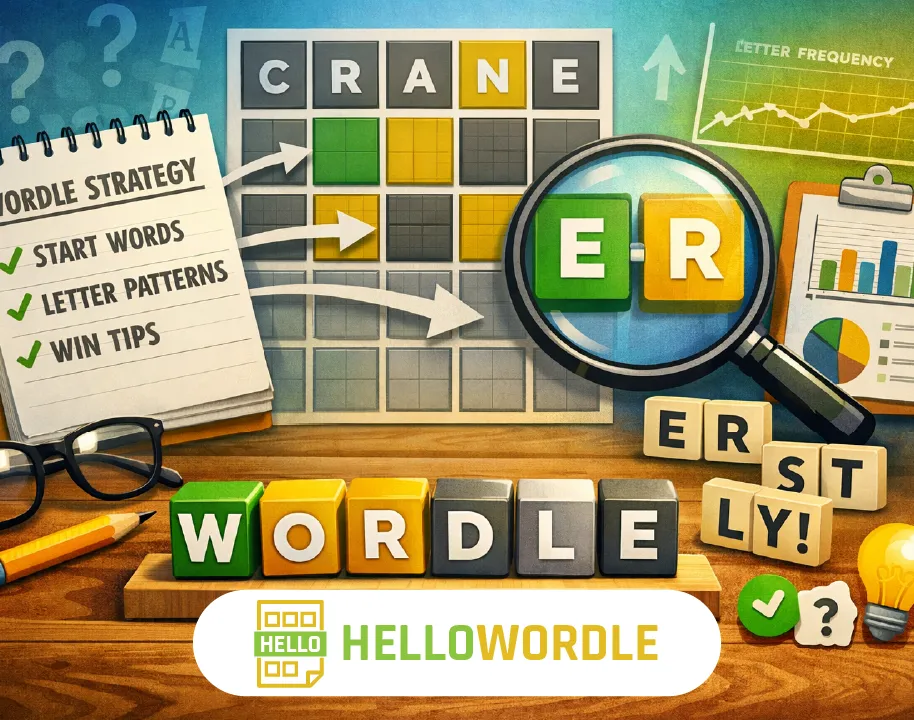
Step 2: Understand the Color Feedback System
After submitting a guess, tiles change colors:
| Color | Meaning | What It Tells You |
|---|---|---|
| 🟩 Green | Correct letter, correct position | Lock it in |
| 🟨 Yellow | Correct letter, wrong position | Reposition it |
| ⬜ Gray | Letter not in word | Avoid reusing (usually) |
This system is the core mechanic of Wordle. Every move should be based on interpreting this feedback properly.
If you ignore it and just “feel” your way through guesses, you’ll lose more often than you win. That’s just reality.
Official Rules (Confirmed & Accurate)
According to the instructions on the official NYT page:
| Rule | Explanation |
|---|---|
| Word length | Always five letters |
| Attempts | Maximum of six guesses |
| Dictionary validity | Must be real English words |
| Duplicate letters | Allowed |
| Daily limit | One puzzle per day |
Duplicate letters are crucial. Many beginners eliminate letters too aggressively, forgetting that the answer may include repeats.
Example:
If the answer is “LEVEL,” both L and E repeat. If you guessed L once and saw one green, that doesn’t mean there isn’t another L hiding somewhere.
That detail alone improves win rates significantly.
Hard Mode: What It Is & Why It Matters
Wordle includes an optional setting called Hard Mode.
In Hard Mode:
- You must reuse all revealed green letters in their correct positions.
- You must include any yellow letters in subsequent guesses.
This forces you to follow logical constraints instead of using “information words” freely.
| Mode | Flexibility | Difficulty |
|---|---|---|
| Normal Mode | Can guess any word | Moderate |
| Hard Mode | Must use revealed clues | Higher |
Hard Mode rewards precision thinking. If you’re serious about mastering how to play wordle efficiently, turning it on can sharpen your deduction skills.
Most Common Letters in Wordle
Based on large-scale community analyses and frequency breakdowns of historical answers, these are among the most common letters:
| Rank | Letter | Why It Matters |
|---|---|---|
| 1 | E | Most common vowel |
| 2 | A | High appearance rate |
| 3 | R | Frequent consonant |
| 4 | O | Strong vowel coverage |
| 5 | T | Common ending letter |
Using starting words that include combinations of E, A, R, O, and T statistically improves early feedback.
That’s why SLATE and CRANE are so popular.
Wordle Strategy Table: Beginner vs Advanced
| Strategy Level | What Players Do | Efficiency |
|---|---|---|
| Beginner | Random guesses | Low |
| Intermediate | Avoid gray letters | Moderate |
| Advanced | Use probability logic + patterns | High |
| Expert | Minimize solution branches | Very High |
Advanced players treat Wordle like a narrowing funnel. Every guess should reduce possible outcomes.
Real Example Walkthrough
First Guess: SLATE
Result:
- S – Gray
- L – Yellow
- A – Green
- T – Gray
- E – Yellow
Logical deductions:
| Letter | Status | Action |
|---|---|---|
| S | Not in word | Remove |
| T | Not in word | Remove |
| A | Correct position | Lock at position 3 |
| L | In word | Move position |
| E | In word | Reposition |
Second guess should:
- Keep A in position 3
- Include L and E
- Introduce new letters
Strong options:
- PLEAD
- CLEAR
- BLEAK
That’s structured deduction — not guessing.
Using WordleBot for Improvement
The New York Times offers an AI analysis tool called WordleBot, which evaluates your daily guesses.
It shows:
- Skill score
- Luck score
- Efficiency rating
- Optimal solution path
This tool is incredibly useful for improving long-term strategy. It reveals whether you solved the puzzle through logic or just got lucky.
If you’re serious about improving, reviewing WordleBot feedback helps you see patterns in your mistakes.
Common Word Patterns in Wordle Answers
Many Wordle answers follow predictable English patterns.
| Pattern | Examples |
|---|---|
| _IGHT | LIGHT, MIGHT |
| _OUND | SOUND, ROUND |
| _ATER | WATER, LATER |
| _OULD | WOULD, COULD |
| _EACH | TEACH, BEACH |
Recognizing suffix clusters dramatically reduces solution branches.
If you identify “_IGHT,” your next move is testing new first letters instead of rebuilding the entire structure.
That’s efficiency.
Cognitive Benefits (Backed by Research)
Word puzzles are associated with cognitive engagement and working memory stimulation. According to research shared by the National Institute on Aging, mentally stimulating activities like word games may support brain health over time.
Wordle exercises:
- Logical deduction
- Short-term memory
- Vocabulary recall
- Pattern recognition
It’s not a medical treatment, obviously. But it’s productive mental activity.
Pros and Cons of Wordle
| Pros | Cons |
|---|---|
| Free to play | Only one puzzle daily |
| Quick (under 5 minutes) | Some obscure answers |
| Encourages logic | No difficulty scaling |
| Shareable results | Can feel repetitive |
Minimalism is both its strength and limitation.
SEO-Focused FAQ Section
You get six total attempts.
Yes, duplicate letters are allowed.
Yes. The daily puzzle is identical globally.
Hard Mode requires you to use previously revealed clues in all future guesses.
There’s no single best word, but SLATE, CRANE, and TRACE are statistically strong openers.
Final Strategy Summary Table
| Action | Why It Works |
|---|---|
| Start with vowel-rich words | Maximizes early information |
| Avoid gray letters | Prevents wasted guesses |
| Recognize suffix patterns | Narrows branches fast |
| Consider duplicate letters | Avoids false elimination |
| Review WordleBot | Improves long-term skill |
Conclusion: How to Play Wordle the Smart Way
Learning how to play wordle takes minutes. Playing it well takes discipline.
The difference between random guessing and strategic solving comes down to:
- Interpreting color feedback carefully
- Using probability-based starting words
- Recognizing common word patterns
- Avoiding emotional guesses
- Practicing consistently
If you want to take it further, try Hard Mode for sharper logic, and review your games using WordleBot to refine decision-making.
Wordle isn’t just a daily puzzle. It’s a structured thinking exercise disguised as a game. And once you approach it strategically, your average guesses will drop.
Try applying these methods tomorrow. Track your improvement for a week.
And if this guide helped you understand the game better, bookmark it — or share your current streak with a friend. That small grid of green squares feels even better when you earned it logically.