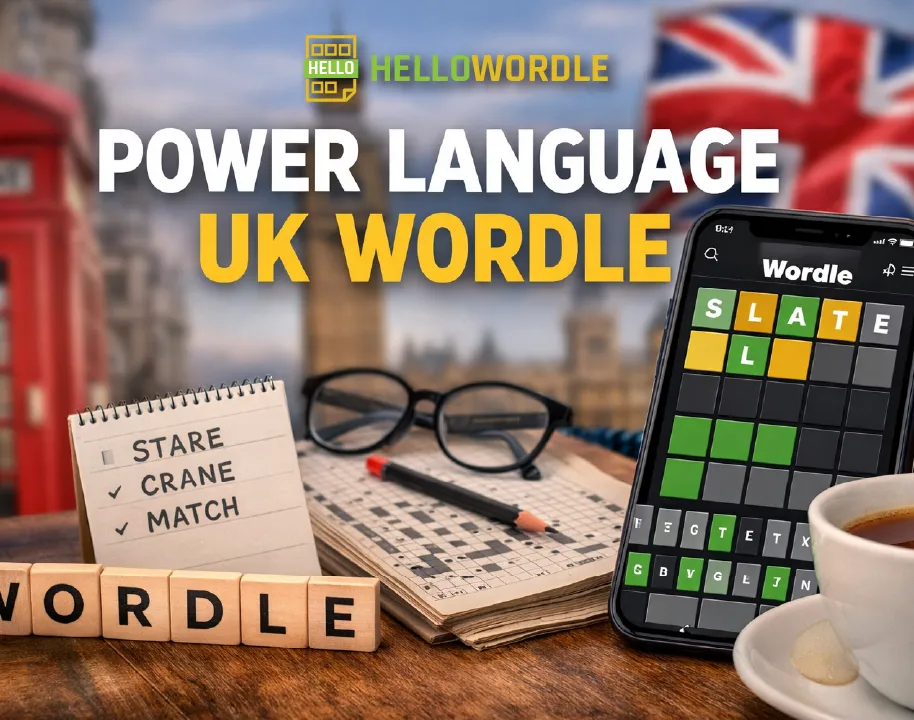
If you’ve ever searched for power language uk wordle, you probably weren’t just hunting for a definition. More likely, you were trying to get back to a small daily ritual you’d somehow missed. Wordle isn’t loud or dramatic, it doesn’t push notifications or demand hours of attention, yet it quietly became part of everyday life for millions of people. In the UK especially, the phrase “power language” stuck around long after the original website stopped being Wordle’s main home.
This article explains what power language uk wordle really means, why it resonates so strongly with British players, and how it fits into the wider world of daily puzzles. We’ll look at the game’s origins, how it works, the subtle UK vs US language nuance, and a few genuinely useful tips to improve your play without turning Wordle into homework.
What Does “Power Language UK Wordle” Actually Mean?
Wordle didn’t begin as a corporate product or media brand. It started as a small browser game hosted on powerlanguage.co.uk, a personal website run by software engineer Josh Wardle. “Powerlanguage” was simply his online username, but it ended up becoming inseparable from the game itself. For many UK players, typing that URL directly into the browser became part of the routine, which explains why power language uk wordle is still such a common search phrase today.
Eventually, Wordle was acquired by The New York Times. After the acquisition, the original Powerlanguage site began redirecting players to the official Wordle page, which now lives within the NYT Games ecosystem and acts as the single authoritative version of the puzzle. You can still play Wordle exactly as before on the official Wordle page hosted by The New York Times, and the overall experience has intentionally stayed simple and familiar.
When the acquisition was announced, the New York Times confirmed that Wordle would remain free to play and browser-based, easing early concerns that the game might be locked behind a paywall or turned into something more commercial. That reassurance played a big role in maintaining trust with long-time players who had been there since the Powerlanguage days.
At its core, “power language uk wordle” doesn’t describe a separate game. It describes a moment in internet culture, and how habits formed early on tend to stick.
Why Wordle Clicked So Hard With UK Players
There are plenty of word games online, but Wordle landed differently, especially in the UK. Part of that comes down to how little it asks from the player.
First, Wordle respects your time. One puzzle per day, no more. You either solve it or you don’t, and then you move on. That rhythm mirrors traditional British puzzles like crosswords in newspapers, where the challenge fits neatly into your day instead of taking it over.
Second, language familiarity matters. Many accepted guesses in Wordle include British English spellings, which helps UK players feel at home when experimenting with words. At the same time, it’s worth being precise here: while UK spellings are often valid guesses, the final solution list is curated by the New York Times using a primarily US-English framework. That means words like colour or fibre might be accepted guesses, but they won’t always appear as the answer. This subtle tension is something UK players pick up on over time, and it actually adds another layer of challenge.
Finally, Wordle became social without being noisy. Sharing results as coloured squares let people compare progress without spoiling the answer. It turned Wordle into a quiet, friendly competition across group chats, offices, and families. No explanation needed, everyone already understood the rules.
How Power Language Wordle Works (A Simple Breakdown)
The mechanics of Wordle are famously straightforward:
- You guess a five-letter word
- The game gives you colour feedback
- You repeat, up to six attempts
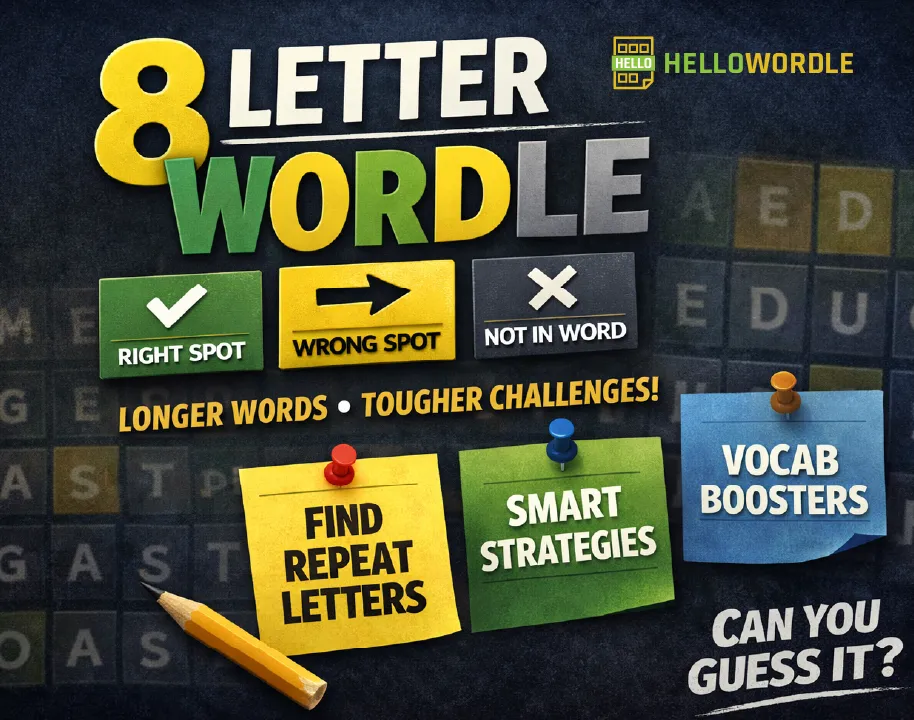
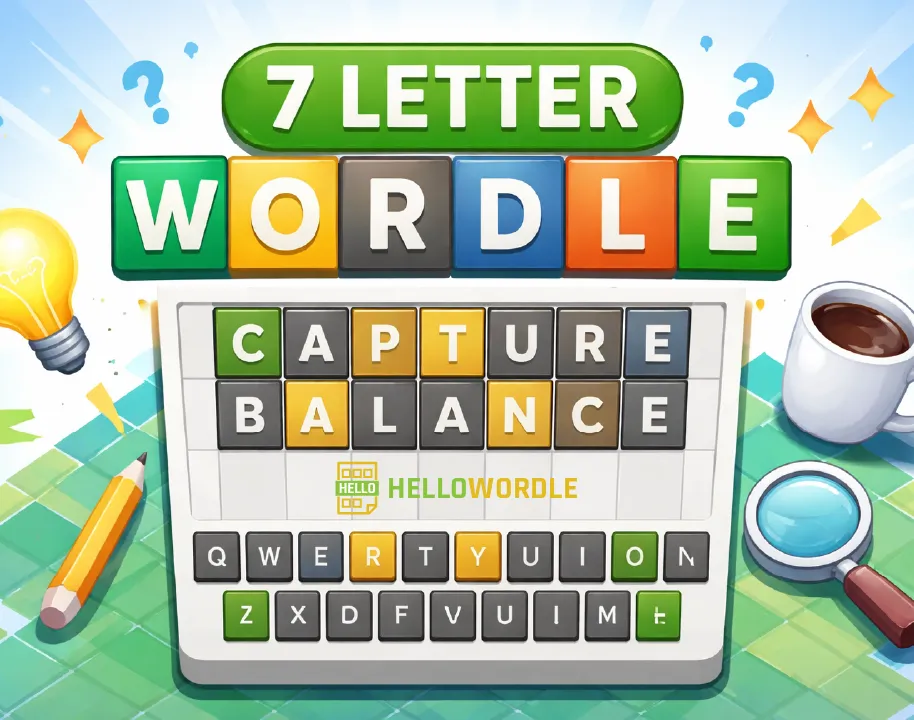
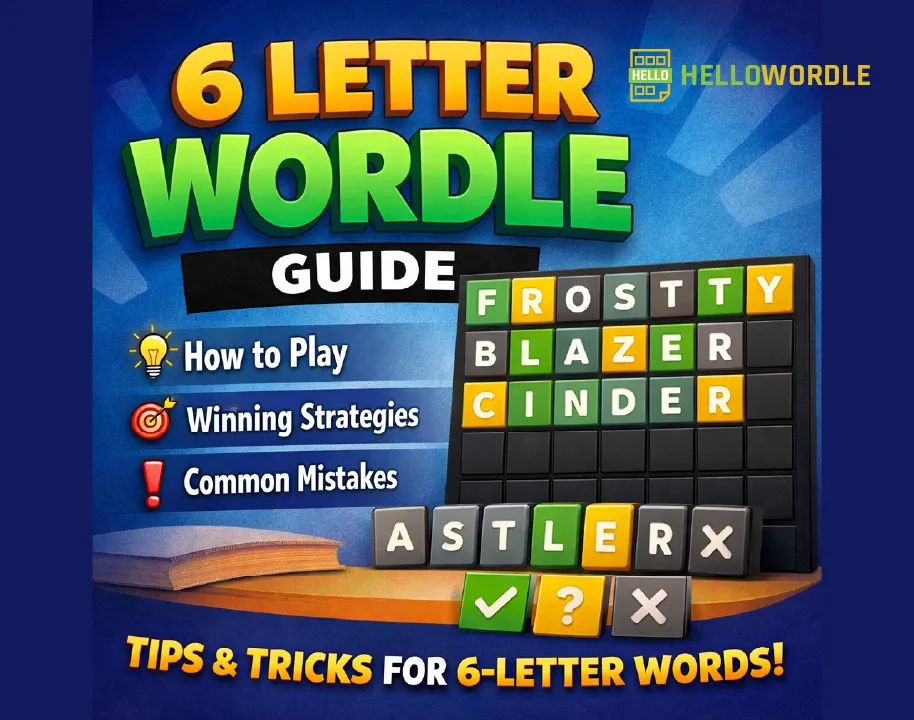
Green tiles show letters that are correct and in the right position. Yellow tiles show letters that belong in the word but are in the wrong spot. Grey tiles mean that letter isn’t part of today’s solution at all.
The simplicity is deliberate. The limitation of one puzzle per day is what turns Wordle into part of the daily puzzles tradition, rather than just another game you play endlessly and forget about.
Why Daily Puzzles Like Wordle Are So Addictive (In a Good Way)
Daily puzzles work because they create a sense of closure. You know there’s a clear start and a clear end. Psychologists often describe this as a “bounded challenge”, something that’s small enough to complete but still mentally engaging.
Wordle fits that perfectly. Five letters, six guesses, one solution. There’s no ambiguity about what you’re meant to do. That structure lowers stress while still giving your brain a little workout.
For many UK players, Wordle became a quiet mental warm-up. Something you do with your first cup of tea, before emails, before the day properly begins. It doesn’t shout for attention, and that’s exactly why it works.
Tips to Improve Your Power Language UK Wordle Game
You don’t need advanced statistics or spreadsheets to get better at Wordle. A few practical habits go a long way.
Choose Smart Opening Words
Strong starting words usually contain common consonants and at least two vowels. Words like STARE, CRANE, or SLATE help you gather useful information early without boxing you in too quickly.
Stay Flexible Early On
It’s tempting to commit to a word pattern after the first or second guess, but that can backfire. Even if you hit a green letter early, keep your options open. British English words, in particular, can surprise you with vowel placement.
Treat Yellow Tiles as Instructions
Yellow letters aren’t just hints, they’re instructions to move that letter somewhere else. Repeating a yellow letter in the same position wastes a guess, and guesses are precious.
Don’t Fear the Occasional Loss
Not solving the puzzle isn’t failure, it’s practice. Over time, you’ll start recognising which letter combinations appear often in English and which almost never do. That intuition builds naturally.
Is UK Wordle Different From US Wordle?
Officially, there is only one Wordle, now maintained by The New York Times. The rules, reset time, and mechanics are identical worldwide.
That said, there are unofficial UK-focused Wordle variants and clones that offer unlimited play or more frequent puzzles. These can be useful for practice, but they aren’t the same as the official experience.
The real difference for UK players isn’t the rules, it’s linguistic expectation. Thinking in British spelling can subtly influence guessing strategies, which is why the phrase power language uk wordle still feels relevant even now.
Pros and Cons of Making Wordle a Daily Habit
Pros
- Improves vocabulary without feeling like study
- Encourages logical thinking and pattern recognition
- Fits easily into busy schedules
- Free, browser-based, and distraction-free
Cons
- Only one official puzzle per day
- Can feel frustrating during unlucky streaks
- Limited customization options
For most people, though, the balance leans heavily toward the positive.
Frequently Asked Questions
No. Powerlanguage was the original host, but Wordle is now officially hosted and maintained by The New York Times.
The puzzle resets at midnight local time, so UK players get the new word at 12:00 AM.
Not on the official site. Some third-party sites offer archives, but they aren’t officially supported.
Final Thoughts
The phrase power language uk wordle captures more than a URL. It represents how a simple, well-designed game spread organically, without aggressive marketing or complicated mechanics. Wordle respected its players, and players responded by making it part of their lives.
In a digital space filled with noise, Wordle showed that daily puzzles don’t need to be loud or addictive to be meaningful. They just need to be honest, consistent, and thoughtfully designed.
If you’re still opening Wordle each morning, you’re part of that quiet tradition. And if you drifted away for a while, there’s always tomorrow. One word, six guesses, and a fresh start.