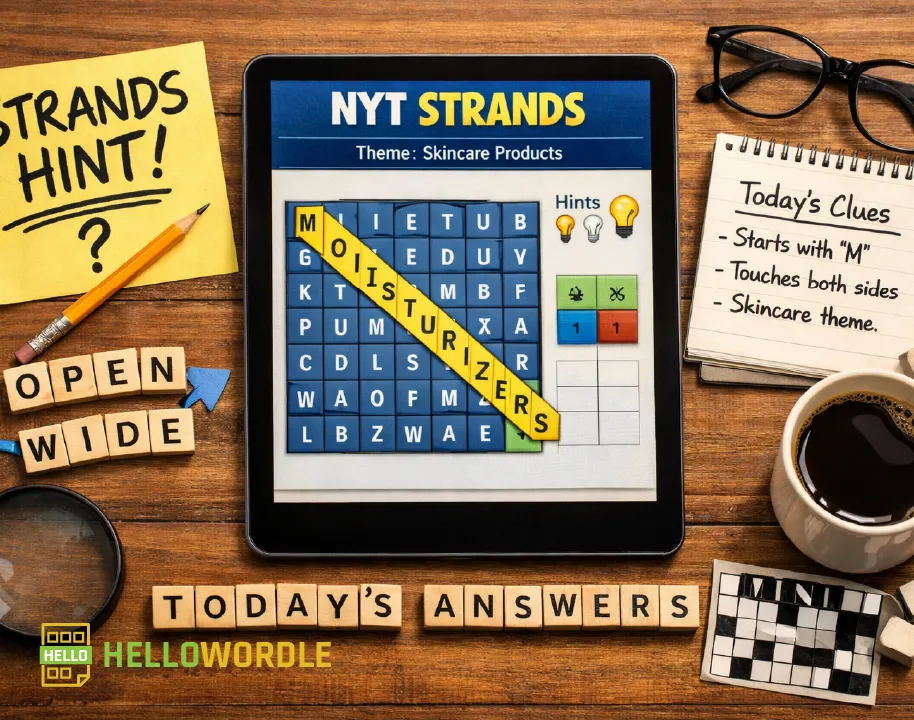
If you’ve searched for strands hint recently, chances are you’re either stuck on the today NYT Strands puzzle or trying to understand how everyone else seems to solve it so fast. And honestly, you’re not alone. Since the New York Times quietly expanded its puzzle lineup, Strands has quickly become one of the most talked-about daily challenges alongside the mini crossword and other York Times word games.
What makes Strands different isn’t just the grid or the words — it’s how hints work, how theme words are connected, and how the board itself becomes part of the clue. A good strands hint doesn’t hand you the solution, it helps you see the puzzle differently. And once that clicks, it’s hard to unsee.
In this guide, we’ll break down what a strands hint really means, how hints for today usually work, and why concepts like touching two opposite sides or sides of the board matter more than you think.
What Is a Strands Hint, Really?
A strands hint is any clue, nudge, or insight that helps you uncover theme words inside the NYT Strands grid without fully spoiling the experience. Unlike straight answers, hints push you toward patterns — not solutions.
In most cases, players look for:
- A hint about the daily theme
- A clue pointing toward the spangram
- Or guidance on how words stretch across the board
This is especially useful when players are searching for today NYT Strands hints or trying to confirm whether they’re on the right track before giving up and checking the answers.
Understanding the NYT Strands Puzzle Format
Strands is part of the official NYT Games collection, the same ecosystem that includes Wordle, the mini crossword, and other daily logic games available through the New York Times Games platform. The puzzle presents players with a grid of letters and a single theme clue.
According to the official NYT Games explanation of Strands gameplay, the goal is to find all theme words hidden in the grid, plus one special word called the spangram that connects the entire concept of the puzzle and physically stretches across the grid, often touching two opposite sides of the board.
That design detail matters more than most beginners realize.
Why “Touching Two Opposite Sides” Is a Big Hint
One of the most overlooked but powerful strands hint concepts is this idea:
the spangram usually connects two opposite sides of the board.
That means:
- Left to right
- Top to bottom
- Or diagonally from one edge to the other
When players struggle, they often focus too much on small words and forget to scan the edges. Once you start looking for a longer word that literally opens wide across the grid, the entire puzzle starts to make sense.
This trick alone helps many players jump from confusion to clarity without needing full hints and answer spoilers.
How Theme Words Are Structured in Today’s Strands Answers
Each day, theme words follow a shared logic. Sometimes it’s categories (foods, tools, emotions). Other times it’s actions, phrases, or even wordplay.
For example, in puzzles where players searched for answers for Strands 676, many noticed the theme words were tightly connected by meaning, but scattered in orientation. Some ran horizontally, others diagonally, forcing players to think beyond straight lines.
A good strands hint here would be something like:
“Think broader, not longer”
That kind of hint pushes players toward recognizing the theme instead of brute-forcing letters.
Why People Look for “Today Strands Answers” So Often
Let’s be real — not every day is a perfect puzzle day. Some themes are vague, some grids feel cluttered, and sometimes your brain just refuses to cooperate. That’s why searches for today strands answers, hints for today, or hints and answer spike daily.
But here’s the thing:
Most experienced players don’t jump straight to answers. They look for:
- A theme confirmation
- A spangram clue
- Or a structural hint about the sides of the board
That keeps the puzzle fun instead of frustrating.
Strands vs Mini Crossword: Why Hints Matter More Here
Compared to the mini crossword, Strands is less about definitions and more about visual logic. In the mini crossword, one wrong letter can be fixed quickly. In Strands, one missed idea can stall the entire board.
That’s why a single, well-timed strands hint often saves more time than brute guessing ever will.
Common Types of Strands Hints Players Use
1. Theme Clarification Hints
These confirm what the theme is about without naming specific words.
2. Spangram Direction Hints
Clues like “look edge to edge” or “think long” subtly guide players toward the main word.
3. Board Awareness Hints
These remind players that words can bend, curve, and wrap around — not just move straight.
Mistakes Players Make When Using Hints
Even experienced players mess this up sometimes.
- Using too many hints early
- Ignoring the theme and chasing random words
- Forgetting that the spangram opens wide across the grid
Hints are most effective when used late, not first.
FAQs About Strands Hints
The NYT provides in-game hint mechanics, but most “strands hint” searches refer to player-shared guidance, not official solutions.
Yes, using hints affects completion stats, similar to other York Times games.
Because it connects the entire puzzle and often touches two opposite sides, unlocking the rest of the theme words faster.
Final Thoughts: Using Strands Hints the Smart Way
A strands hint isn’t about shortcuts — it’s about perspective. The best players don’t avoid hints completely, they use them strategically. Understanding how theme words relate, how the spangram stretches across the sides of the board, and how today’s NYT Strands puzzle is designed makes every solve smoother.
Next time you’re stuck, don’t rush to today strands answers. Pause, rethink the theme, scan the edges, and let the puzzle open wide. More often than not, the solution was already there — you just needed the right hint to see it.