If you’ve ever found yourself Googling “wordle hint today” at 7 AM with a coffee in one hand and mild existential dread in the other — you’re not alone. Millions of people do exactly that every single day. Wordle has become one of those rare internet phenomena that actually stuck around, and understanding how to use hints strategically (without just Googling the answer outright) is something of an art form at this point.
This guide covers everything: the game’s origin story, how hints actually work, the best strategies backed by real data, and how to find reliable daily clues when you’re genuinely stuck. Whether you’re a curious newcomer or a veteran trying to protect a 400-day streak, there’s something here for you.
What Is Wordle, and Why Does It Still Matter?
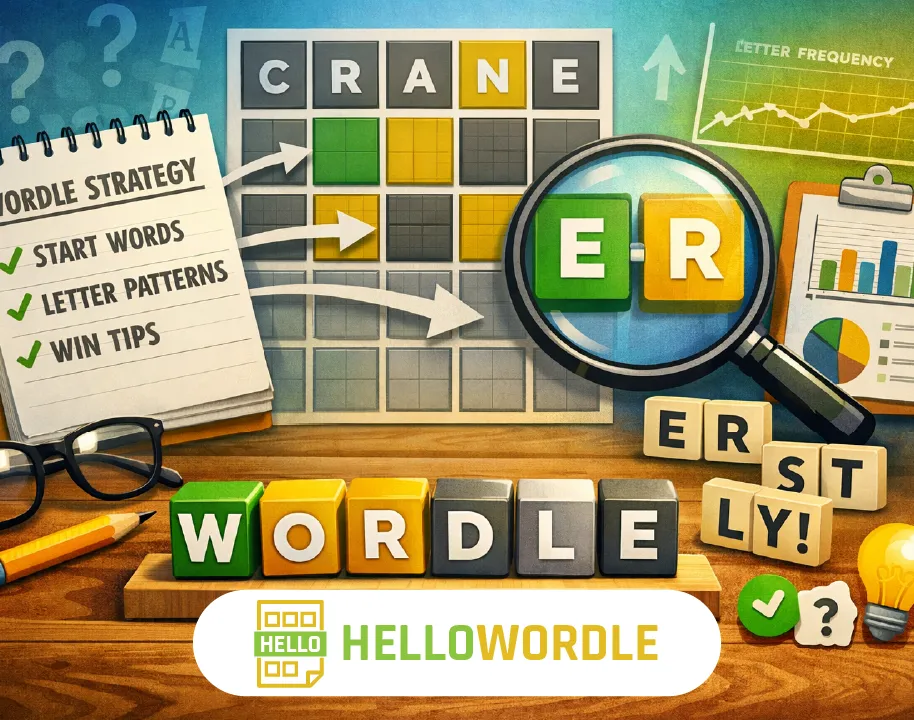
Wordle is a daily, web-based word puzzle published by The New York Times. The rules are simple: you get six attempts to guess a hidden five-letter word. After each guess, color-coded tiles tell you how close you are — green means a letter is in the correct position, yellow means it’s in the word but in the wrong spot, and gray means it’s not in the word at all.
That’s it. No levels, no power-ups, no ads. One puzzle a day, shared globally.
The game was originally created by Josh Wardle, a Welsh software engineer living in Brooklyn, who built it during the COVID-19 pandemic as a personal gift for his partner, Palak Shah. She played a crucial role in shaping the word list — going through roughly 12,000 five-letter English words and narrowing them down to about 2,500 commonly-known ones that would be fair for daily players. In January 2022, The New York Times acquired Wordle for a price reported to be in the low seven figures, and the game has lived on the NYT Games platform ever since.
The scale of what followed is genuinely staggering. According to official statistics shared by The New York Times with The Verge in June 2025, Wordle alone was played 5.3 billion times in 2024. The NYT Games platform overall now has over 10 million daily active players. These numbers weren’t bought with advertising spend or influencer campaigns — Wordle grew because people genuinely enjoyed it and shared it organically, using those now-iconic colored emoji grids on Twitter, WhatsApp, and everywhere else.
So yes, it still matters. If anything, it’s more embedded into daily routines than ever.
Understanding the Wordle Hint System: What You’re Really Getting
When most people search for a “wordle hint today,” they’re not necessarily looking for the answer — they want just enough of a nudge to figure it out themselves. That’s actually a really healthy way to play, and most dedicated Wordle hint sites are built around exactly that philosophy.
A well-structured hint system typically gives you:
- The number of vowels in today’s word
- Whether there are repeated letters
- The starting or ending letter (or both)
- A vague definition of the word
- The word’s category (noun, verb, adjective)
Sites like Parade’s daily Wordle coverage layer these clues progressively, so you can stop reading the moment you feel confident enough to proceed on your own. Each day’s puzzle is available with graduated hints exactly like this.
The NYT itself offers WordleBot, which gives you a post-game analysis of your guesses, ranking them by “skill” and “luck” after you’ve already played. It’s a fantastic tool for getting better over time, even if it’s somewhat brutally honest about your choices.
The Origin of Today’s Hint Culture
The whole “daily Wordle hint” ecosystem didn’t just appear out of nowhere — it grew organically from the game’s community. Back in late 2021, when Wordle was still a scrappy indie game on Wardle’s personal website with fewer than 90 daily players, a group of friends in New Zealand began sharing their results using colored emoji squares. Wardle noticed this and built a “Share” button directly into the game, which turbocharged the social sharing.
From there, puzzle enthusiasts started creating hint guides because they wanted to preserve the challenge for others while still helping people who were stuck. It’s a weirdly generous corner of the internet — people who love word games creating clue systems that respect the integrity of the puzzle. Today, dozens of sites publish daily Wordle hints every morning, and they’ve become as much a part of the game’s culture as the puzzle itself.
How to Find Reliable Wordle Hints Today (and What to Avoid)
Not all hint sites are created equal. Some spoil the answer in the headline (deeply annoying). Others are vague to the point of being useless. Here’s how to find genuinely helpful daily clues:
Trusted Sources for Daily Wordle Hints
The New York Times Official Page — nytimes.com/games/wordle is obviously where you play. They don’t publish hints themselves, but WordleBot (available after you complete the puzzle) gives you detailed analysis.
Parade Magazine — Parade publishes daily Wordle hints and answers with a tiered reveal system. Their coverage is well-organized, with separate sections for clues and the final answer, so you control how much you see.
Sportskeeda & similar gaming coverage sites — These typically publish detailed hint breakdowns including vowel count, starting letter, meaning, and a difficulty assessment.
Wordle-specific tools — Sites like Wordle Hints Today combine hint content with solver tools that let you enter the letters you’ve already tried and narrow down possibilities.
What to Watch Out For
Avoid sites that put the answer in page titles or meta descriptions — they’ll spoil it before you even click. Also be wary of hint pages that use outdated puzzle numbers (they don’t always update promptly), particularly if you’re playing late at night when a new puzzle has already rolled over.
A good rule of thumb: if a site gives you the answer before you’ve asked for it, its not worth your time.
Wordle Strategy: How to Actually Get Better (Not Just Survive)
Finding a wordle hint today is a short-term fix. Understanding Wordle strategy is what separates the people who solve it in three guesses from those who’re sweating it out on guess six every morning.
Start With the Right Opening Word
This is where most players leave points on the table. Your first guess should be a five-letter word with no repeated letters, built from the most common letters in the Wordle answer pool.
According to letter frequency analysis of the full Wordle answer list, the letter E appears in roughly 46% of all Wordle words, A in 39%, R in 34%, O in 29%, and T in 29%. The practical takeaway: your opener should hit as many of these as possible.
The data-backed top openers consistently recommended across multiple analytical sources include:
- SLATE — S, L, A, T, E. Five high-frequency letters, excellent positional coverage. Widely considered the most reliable all-round opener, averaging around 3.5 guesses to solve.
- CRANE — C, R, A, N, E. Particularly beloved by WordleBot and favored for its strong consonant placement signals.
- TRACE or CRATE — Similar letter sets to CRANE, strong alternatives.
- STARE — Four of the five most common Wordle letters in one guess.
- SALET — A medieval helmet term that almost nobody knows in everyday conversation, but algorithmic analyses including work by MIT researchers and the YouTuber 3Blue1Brown have ranked it as the statistically optimal opener. Average solve: ~3.42 guesses. The trade-off is that you’ll feel weird typing a word you’ve never said aloud every single morning.
Research from Professor Barry Smyth of the Insight SFI Research Centre for Data Analytics ran a million simulated Wordle games and found that using “tales” as a single starting word leads to success in over 95% of games, with an average game length of 3.66 rounds. For a two-word seed strategy, starting with “cones” followed by “trial” produced a 96% success rate.
The Color Logic (And What Most People Miss)
Green, yellow, gray — most players understand the basics. But a few subtleties trip people up regularly:
- Gray doesn’t mean “not in the word anywhere” if you have a duplicate letter in your guess. If you guess “SPEED” and the first E is gray but the second is green, E is still in the word — just only once, in that position.
- Yellow is directional information. If E comes back yellow in position 2, don’t just put E somewhere else randomly. Eliminate position 2 specifically while cycling through other positions.
- Use your gray letters as elimination tools. Every gray letter shrinks your word pool significantly. Don’t waste guesses 3 and 4 on words that include letters you already know are absent.
Hard Mode: Should You Play It?
Hard mode forces you to use confirmed letters in every subsequent guess. A lot of experienced players swear by it because it forces you to actually apply your deductions rather than making wild elimination guesses. The downside is that it can trap you — if the answer ends in “-IGHT” for example (light, fight, night, right, sight, might…) you’ll spend several guesses burning through options you already know fit the pattern.
Most casual players are better off in normal mode, while competitive streak-chasers tend to gravitate toward hard mode as a deliberate constraint.
The Psychology of the Streak (And Why Hints Feel Necessary)
Here’s something nobody really talks about: the emotional stakes of Wordle are disproportionately high for what is, objectively, a five-minute word game. People have maintained streaks of hundreds of days and will genuinely seek out a wordle hint today rather than break them.
That’s not a bug, it’s a feature. The streak mechanic creates daily investment, and the one-puzzle-per-day format — a deliberate choice by Josh Wardle, who said it was designed so players spend “only three minutes on the game each day” — creates the kind of scarcity that makes each puzzle feel significant.
The shared experience matters too. Between January 1 and 13, 2022, 1.2 million Wordle results were shared on Twitter alone. There’s something genuinely connecting about solving the same puzzle as millions of strangers, which is why spoiling today’s answer for others is considered seriously bad form in Wordle communities.
Wordle Variations Worth Knowing About
Once you’ve got the daily Wordle habit, the broader puzzle ecosystem opens up. The NYT Games platform now includes Connections, Spelling Bee, Strands, and the classic crossword — all of which were played a combined 10+ billion times in 2024.
Beyond NYT, Wordle’s viral success spawned an entire genre of spinoffs:
- Quordle — Four simultaneous Wordle grids. Genuinely challenging.
- Worldle — Geography-based: guess a country from its silhouette.
- Nerdle — Math equations instead of words.
- Heardle — Identify songs from short clips. (Now defunct, sadly.)
- Dordle — Two Wordles at once.
Each of these has their own hint communities, though the original Wordle remains the cultural touchstone.
Pros and Cons of Using Wordle Hints
Let’s be honest about this, because there’s a real spectrum here.
Pros:
- Prevents streak-ending losses on genuinely obscure words
- Teaches you vocabulary (looking up what a hint word means is legitimately educational)
- Keeps the game enjoyable rather than frustrating
- Tiered hint systems let you take only as much help as you actually need
Cons:
- Overreliance on hints prevents actual skill improvement
- Getting the answer directly defeats the purpose of the game
- Spoils the shared discovery moment with friends or family
- Can become a crutch that stops you from developing intuition
The sweet spot most experienced players land on: use hints to narrow down vowel count or confirm/deny a structural hunch, but avoid going straight to the answer unless you’ve already exhausted your guesses and the streak is genuinely on the line.
FAQ: Wordle Hints, Answers, and Strategy
The best approach is to visit tiered hint pages like Parade’s daily coverage or Sportskeeda’s Wordle section. They structure clues so you can stop reading before hitting the spoiler. Just be careful with your scrolling.
Yes, Wordle remains free to play on nytimes.com/games/wordle. You don’t need a NYT subscription to play the daily puzzle, though some surrounding features of the NYT Games app require one.
Based on multiple independent analyses, SLATE and CRANE are the strongest practical openers for most players. SALET is technically optimal by some simulations but feels strange to type every day. Avoid ADIEU — it tests four vowels but leaves you with only one consonant, which isn’t as efficient as it sounds.
Difficulty varies considerably. Words with common double-letter patterns (like -IGHT endings with multiple valid options) or obscure vocabulary tend to trip up the most players. WordleBot publishes average solve statistics after each puzzle which give a sense of how tricky that day’s word was comparatively.
The official NYT site only hosts the current day’s puzzle. However, several archive sites allow you to play past puzzles if you want to practice or catch up.
Yes, missing a single day resets your streak to zero. This is, understandably, a sore point for many players.
Reasonably so, yes. The rise of NYT Games has led to increased academic interest in the cognitive effects of daily word puzzles. The combination of vocabulary recall, deductive reasoning, and spatial pattern recognition makes Wordle a reasonably solid light cognitive workout — though its probably not replacing your gym membership anytime soon.
Tips for Maintaining a Long Streak
- Play at the same time every day. Habit formation matters. Many consistent players open Wordle with their morning coffee.
- Stick to a consistent opening word. Changing it every day prevents you from building positional pattern recognition.
- Prioritize elimination over confirmation. In guesses 2 and 3, it’s often better to test new letters than to confirm ones you already know are in the word.
- Learn common five-letter word endings. Patterns like -TION, -IGHT, -OUND, -ATCH appear frequently and knowing them helps you make smarter guesses when you’re down to one or two unknowns.
- Use hints responsibly. There’s no shame in using a structural clue to stay on track. Just try to leave the actual answer reveal as a last resort.
Conclusion: The Humble Daily Ritual
Searching for a “wordle hint today” is honestly one of the more wholesome things people do on the internet. It’s not cheating so much as playing the game in your own way — and for a game that started as a private love letter between two people during a pandemic, then grew into a global shared ritual played billions of times a year, that feels right.
Use hints wisely, build genuine strategy over time, keep your streak alive, and remember: the whole point is that five minutes every morning where you’re thinking about language instead of whatever else is filling your screen. That’s worth protecting.
Play today’s puzzle at nytimes.com/games/wordle. Good luck — you’ve probably got this.
Sources: Wikipedia — Wordle | Wikipedia — Josh Wardle | Wikipedia — NYT Games | SFI Research Centre Data Analytics | Phrazle — History of Wordle | Wordle Hints Today — Best Starting Words | Parade — Daily Wordle Hints / Hellowordle