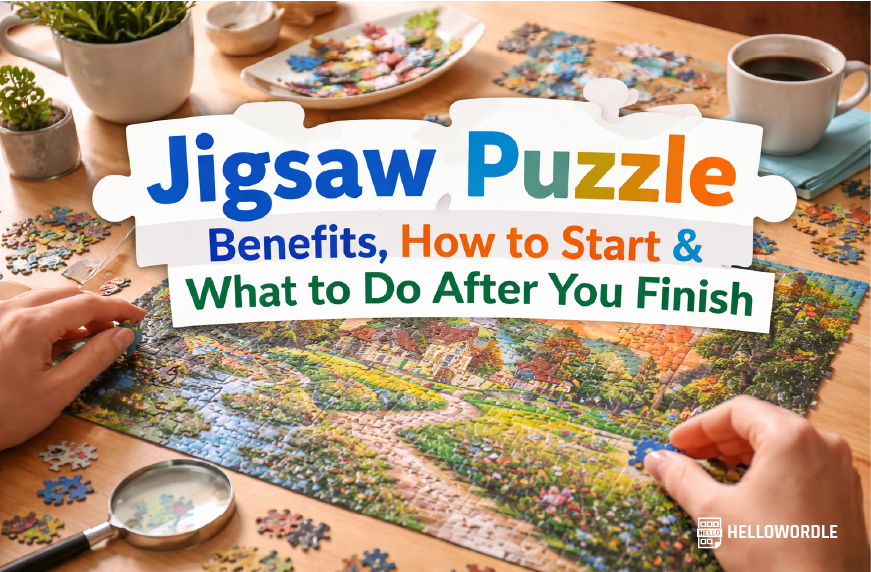
At first glance, a jigsaw puzzle doesn’t look like much. Just a pile of random pieces, different shapes, nothing really making sense. But once you start, it pulls you in.
In a time where everything is fast—short videos, endless scrolling, constant alerts—working on a puzzle feels kinda refreshing. It slows things down. You sit there, thinking, trying pieces, sometimes getting stuck… and then suddenly one fits, and it clicks.
You’re not rushing. There’s no timer. Just you and the puzzle.
That’s probably why puzzles are becoming popular again. People want something simple that actually makes them feel focused.
What Is a Jigsaw Puzzle? (A Bit of History Too)
A jigsaw puzzle is basically an image that’s been cut into small, uneven pieces. Your job is to put it back together so the full picture appears again.
Sounds easy—but it’s not always.
The idea goes way back to the 1760s. A mapmaker named John Spilsbury created one of the first puzzles by cutting maps into pieces, mostly for teaching kids geography. You can actually find more about this through the Smithsonian Institution, which keeps records of early educational tools.
Today, puzzles are everywhere—and they come in all sizes depending on the number of pieces:
| Level | Pieces | Who It’s For |
|---|---|---|
| Easy | 100–300 | Beginners, kids |
| Medium | 500–1000 | Most people |
| Hard | 1500+ | Experienced puzzlers |
More pieces usually means more time… and more patience needed.
Why Jigsaw Puzzles Are Still Popular
You’d think puzzles would fade away, but it’s actually the opposite.
People Are Tired of Screens
Most of us spend hours on phones and laptops. A puzzle gives your brain a break from all that.
It Helps You Slow Down
There’s no pressure. You don’t need to win anything. you just sit and solve.
You Can Do It Your Way
Alone, with family, even with friends—it works either way.
That’s why even with modern puzzle games and apps, physical puzzles still hold their place.
Are Jigsaw Puzzles Good for Your Brain?
Short answer—yes, they are.
Studies backed by the National Institutes of Health suggest that activities like puzzles help keep the brain active and sharp.
What They Improve
| Skill | Impact |
|---|---|
| Memory | Helps you remember patterns and shapes |
| Problem-solving | You figure out where things fit |
| Focus | Keeps your attention in one place |
| Visual skills | Helps recognize details faster |
Mental Side Benefits
- Less stress
- Better mood
- A calm, focused mindset
It’s not just about finishing the puzzle—it’s about what happens while you’re doing it.
Different Types of Jigsaw Puzzles
Not all puzzles feel the same, honestly.
Cardboard Puzzles
Most common, easy to find, affordable.
Wooden Puzzles
Better quality, last longer, often have unique shapes.
3D Puzzles
Instead of flat images, you build objects or landmarks.
Digital Puzzle Games
Available on apps—good for quick play, but not the same feeling.
How to Do a Jigsaw Puzzle (Simple Method That Works)
If you’re new, don’t overcomplicate it.
Basic Steps
- Start with a smaller puzzle (300–500 pieces is good)
- Separate edge pieces first
- Build the border
- Group similar colors together
- Work section by section
It might feel confusing at first—but give it time.
Tips That Actually Help
- Use good lighting (this matters more than you think)
- Turn pieces around—it helps spot matches
- Focus on colors, not just shapes
- Take breaks if you get stuck
One thing people don’t realize: sometimes stepping away helps you solve it faster.
Jigsaw Puzzle vs Digital Puzzle Games
| Feature | Jigsaw Puzzle | Puzzle Games |
|---|---|---|
| Screen use | No | Yes |
| Focus level | High | Medium |
| Stress | Low | Can vary |
| Feel | Physical | Digital |
Both are fine—but physical puzzles feel more… real.
What to Do After You Finish a Puzzle
This part surprises a lot of beginners.
Options You Have
| Option | What You Can Do |
|---|---|
| Frame it | Turn it into wall art |
| Take it apart | Solve again later |
| Trade it | Swap with others |
| Store it | Keep it safe |
Some people even collect puzzles and display them.
Where to Get Good Puzzles
You can check collections from National Geographic for detailed and realistic designs.
Brands like Ravensburger and White Mountain are also well-known for quality.
Good quality puzzles fit better—and honestly, that makes a big difference.
Common Mistakes People Make
- Starting with too many pieces
- Not sorting pieces
- Picking very complex images
- Quitting too early
Everyone struggles in the beginning. That’s normal.
FAQs
300–500 is ideal. Not too easy, not too hard.
Depends:
500 pieces → a few hours
1000 pieces → longer, maybe a day or more
Yes. They improve focus and reduce stress.
Final Thoughts
A jigsaw puzzle isn’t just about putting pieces together—it’s about slowing down a bit.
You don’t need anything fancy. Just some time and a bit of patience.
Quick Takeaways
- Good for your brain and focus
- Helps reduce stress
- Easy to start, hard to master
- You can reuse or display them
If you’ve never tried one before, start small. You’ll probably get hooked without even realizing it.